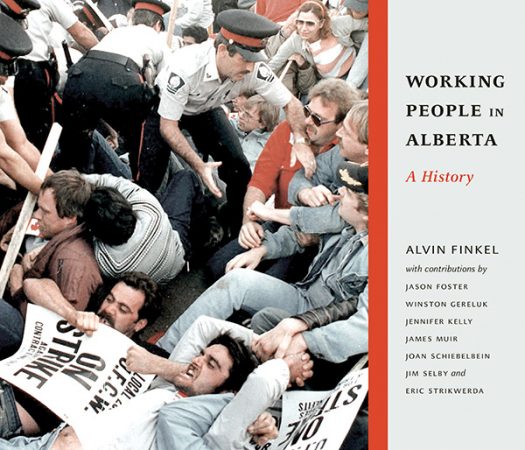
Working People in Alberta A History
Alvin Finkel, with contributions by Jason Foster, Winston Gereluk, Jennifer Kelly and Dan Cui, James Muir, Joan Schiebelbein, Jim Selby, and Eric Strikwerda
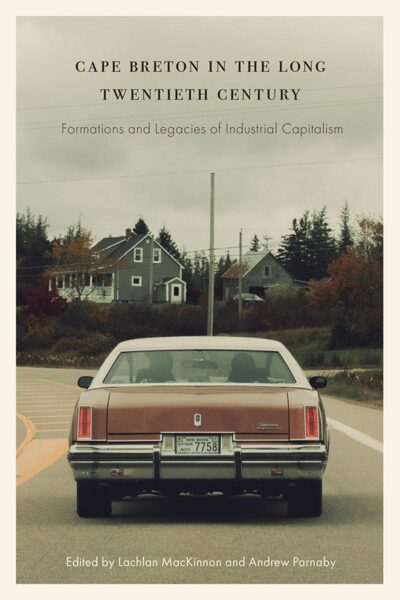
The emergence, dominance, and alarmingly rapid retreat of modernist industrial capitalism on Cape Breton Island during the “long twentieth century” offers a particularly captivating window on the lasting and varied effects of deindustrialization. Now, at the tail end of the industrial moment in North American history, the story of Cape Breton Island presents an opportunity to reflect on how industrialization and deindustrialization have shaped human experiences. Covering the period between 1860 and the early 2000s, this volume looks at trade unionism, state and cultural responses to deindustrialization, including the more recent pivot towards the tourist industry, and the lived experiences of Indigenous and Black people. Rather than focusing on the separate or distinct nature of Cape Breton, contributors place the island within broad transnational networks such as the financial world of the Anglo-Atlantic, the Celtic music revival, the Black diaspora, Canadian development programs, and more. In capturing the vital elements of a region on the rural resource frontier that was battered by deindustrialization, the histories included here show how the interplay of the state, cultures, and transnational connections shaped how people navigated these heavy pressures, both individually and collectively.
Cape Breton in the Long Twentieth Century is a fine example of the wider re-engagement with political economy in the history discipline. The fact that it does so without losing its anchoring in everyday lives or diverse communities bodes well for future research on Cape Breton and Canada more generally.
Steven High, Histoire sociale / Social History
This book would not only be of interest to specialists in the region’s histories but also offers a contribution to the national and transnational economic and cultural histories of hinterland industrialization and de-industrialization.
Brad Cross, Canadian Historical Review
The book’s main strength lies not within the detailed examination of the changes that shaped the island as it is today, but in the individual forces that combined efforts amidst turbulent economic, religious, and even linguistic times so that they can realistically and respectfully render the role of various factors within the island’s formation and soul. After all, it is the lived experiences of Cape Bretoners that best illustrate their indefatigable desire to support and fight for their island’s rightful place in the ever-changing world outside.
Alexander Kostov, British Journal of Canadian Studies
This volume will appeal to historians and others focused on Cape Breton and Atlantic Canada. […] The essays are carefully researched and written in an engaging style.
Kurt Korneski, Labor: Studies in Working Class History
This work is licensed under a Creative Commons License (CC BY-NC-ND 4.0). It may be reproduced for non-commercial purposes, provided that the original author is credited.
Alvin Finkel, with contributions by Jason Foster, Winston Gereluk, Jennifer Kelly and Dan Cui, James Muir, Joan Schiebelbein, Jim Selby, and Eric Strikwerda
Jason Russell

Robert M. Seiler and Tamara P. Seiler