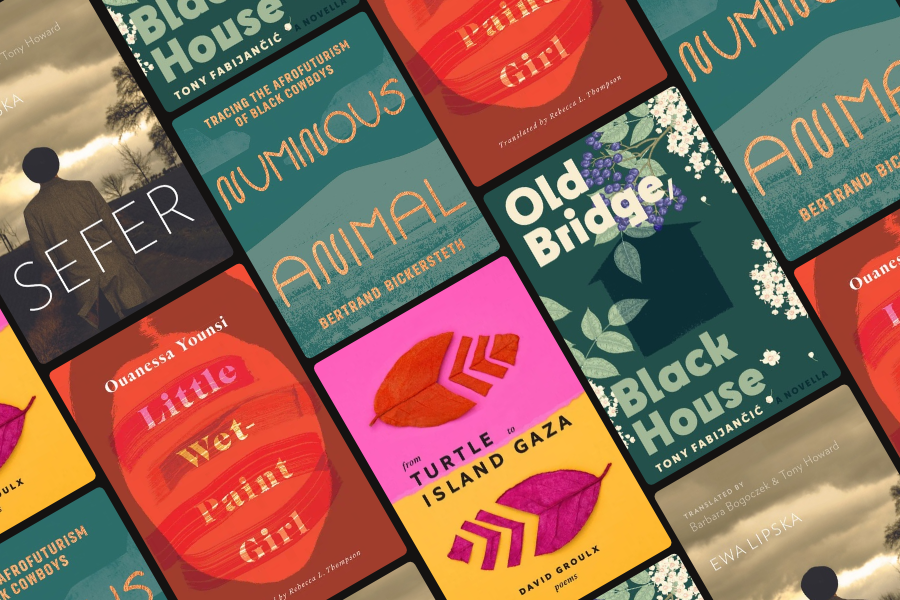
From October 19 to 25, scholars, publishers, and readers around the globe are celebrating Open Access Week. This week inspires connection and collaboration in the open community and encourages momentum toward common goals in open access publishing. Here at AU Press, we follow the diamond open access model, which refers to the free, immediate, and permanent online access to a publication’s version of record. This model applies not only to our scholarly works, but also to works of literature. Below we are sharing excerpts from five wonderful, genre-bending, and daring stories, poetry collections, translations, and memoirs.
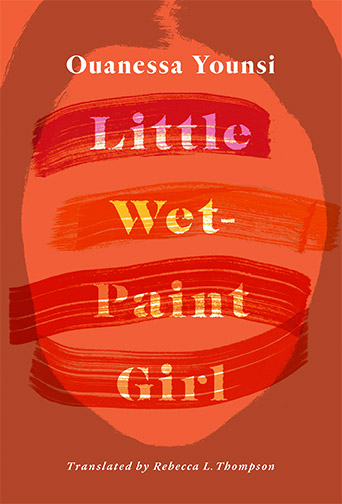
Little Wet-Paint Girl
Ouanessa Younsi, translated by Rebecca L. Thompson
Among tall grass and wasps, I didn’t know the wind was an hourglass. My innocence amused the woman next door. Her delight planted watermelons, pink mouthfuls amidst famine. We rescued different species, different riddles:
Why does September make you thirsty?
Once born, who stays behind?
The neighbor woman was a theater.
We grew older, and I lost her by losing myself.
Old Bridge, Black House
Tony Fabijančić
She began to climb the hill towards the stećci. A path between the rocks opened up as she picked her way to the summit. The warmth of the summer morning filtered down into the shade. The blue sky had washed away the black star-flecked heavens and, there in the distance, like a grey thread snaking to the east, was a road. Like the one, she imagined, that was to take the bridgebuilder away.
The stones were tall and white. No cracks fissured their sides; no other signs of age marked their surfaces. Still, because of the stresses of the earth upon them, they leaned towards each other. Coming closer, she noticed the engraved flowers on each lower right corner.
In that moment, after years of waiting, the earth went silent. A pause, a space where nothing could intrude, protected her from the commotions of the wind and the steady thrumming of cicadas. She couldn’t tell if the silver leaves of distant trees moved at all, or whether the birds tilting above were in fact crossing the sky. She stood unsteadily, a strange new person. The rhythm of her heart and the cadence of her breathing suddenly caught her attention.

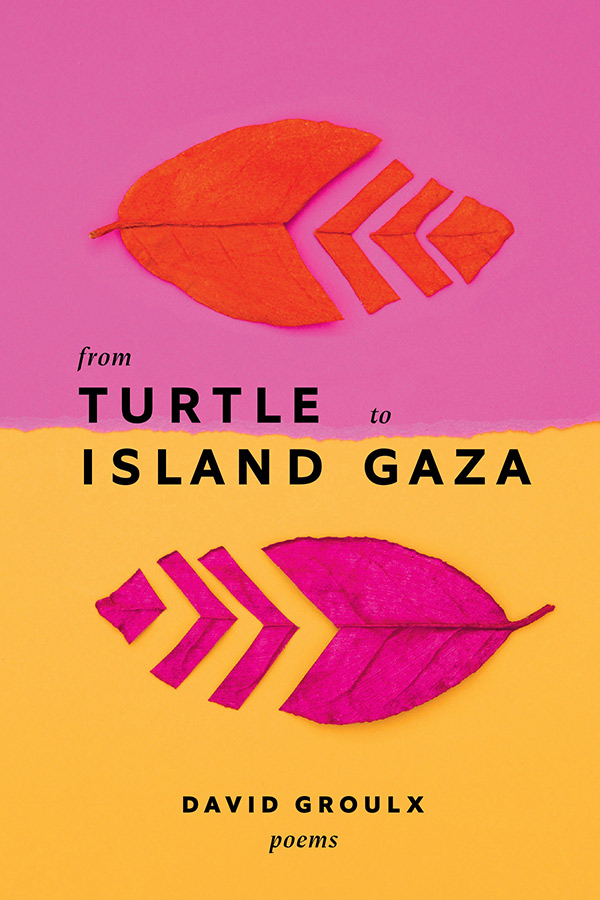
From Turtle Island to Gaza
David Groulx
When we speak of freedom
we must also speak of our freedom
to be kind
to be just
and to be in love
when we speak of freedom
this is what we
must speak of
Numinous Animal: Tracing the Afrofuturism of Black Cowboys
Bertrand Bickersteth
While archaeologists “read” through history by uncovering layers of soil, poetic stratigraphy recovers lost history palimpsestically. With this type of poetry, the act of uncovering is the act of covering. Or the result of dis-covery is, to put it poetically, the process of this covery. This, to some extent, is the role of art where other disciplines—science, law, religion—fail us. Even though we might be able to determine a historical fact to a specific and narrow degree of certainty, the uncertain factor always remains. The arts, and in my case, poetry, deliver that elusive part of the fact, the irretrievable unknown, even as it reinforces—irretrievably—the unknown.


Sefer
Ewa Lipska, translated by Barbara Bogoczek and Tony Howard
In those days I often talked to my father. “Read yourself,” he used to say, “read yourself carefully, revise yourself, then take the Test.” Increasingly, his life was invading my space. Sometimes I felt he wanted to present me with some black box, the symbol of the disaster he’d survived. “Do you know what I’m going to tell the dead?” he used to ask me: “‘I never forgot you.’”
If you’re looking for more open access fun, join us for a webinar later in the week entitled Publishing for Impact: A Conversation on Open Access.