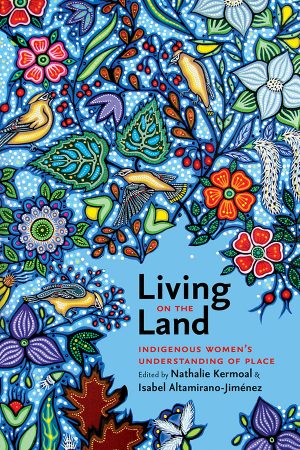
Living on the Land Indigenous Women's Understanding of Place
edited by Nathalie Kermoal and Isabel Altamirano-Jiménez
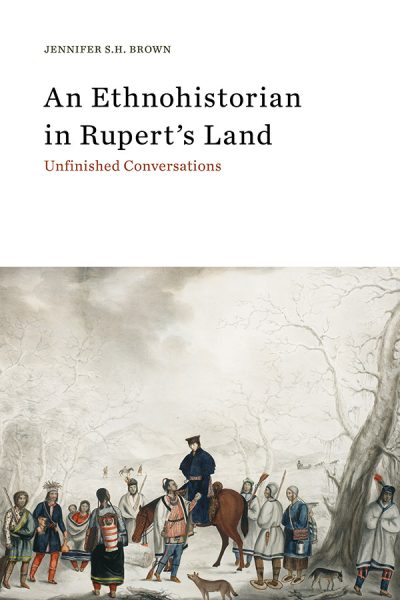
In 1670, the ancient homeland of the Cree and Ojibwe people of Hudson Bay became known to the English entrepreneurs of the Hudson’s Bay Company as Rupert’s Land, after the founder and absentee landlord, Prince Rupert. For four decades, Jennifer S. H. Brown has examined the complex relationships that developed among the newcomers and the Algonquian communities—who hosted and tolerated the fur traders—and later, the missionaries, anthropologists, and others who found their way into Indigenous lives and territories. The eighteen essays gathered in this book explore Brown’s investigations into the surprising range of interactions among Indigenous people and newcomers as they met or observed one another from a distance, and as they competed, compromised, and rejected or adapted to change.
While diverse in their subject matter, the essays have thematic unity in their focus on the old HBC territory and its peoples from the 1600s to the present. More than an anthology, the chapters of An Ethnohistorian in Rupert’s Land provide examples of Brown’s exceptional skill in the close study of texts, including oral documents, images, artifacts, and other cultural expressions. The volume as a whole represents the scholarly evolution of one of the leading ethnohistorians in Canada and the United States.
Brown’s ability to read between the lines of texts of all kinds is without parallel in Canadian ethnohistory. The articles are a pleasure to read, full of insight and analysis, and written with the agreeable style of a born communicator and teacher. […] Brown’s work continues to impress and influence.
Transmotion
Brown’s clear narrative writing style makes this collection accessible to both academic and public audiences. Historians will appreciate her close and thorough reading of primary sources. Anthropologists will recognize Brown’s attention to language and her reading of the historical record through an ethnographic lens that can focus on both the micro-scales of domestic life and the macro-scales of the fur trade’s political economy.
The Canadian Historical Review
A welcome and compelling selection of articles (some previously published, some unpublished) that focus on the stories of Cree, Ojibwe and Métis peoples, Hudson’s Bay and Northwest Company fur traders, Methodist and Anglican missionaries,and twentieth-century anthropologists. […] The varied thematic foci of An Ethnohistorian in Rupert’s Land allow readers to delve into topics and issues related to language, family, marriage, women, and Indigenous stories and memories. Each chapter is of interest in its own right, but gathered here each becomes part of a larger narrative of a lifetime of scholarship and contributions by one of the most important practitioners in her field.
Ethnohistory
This is one of the best readers on the fur trade, with its strongest suits being in the realms of language and gender studies. This is a thoughtful, deep, and priceless contribution that will certainly fuel much further study from the next generation of scholars who will pick up where Brown leaves off.”
Ontario History
This work is licensed under a Creative Commons License (CC BY-NC-ND 4.0). It may be reproduced for non-commercial purposes, provided that the original author is credited.
edited by Nathalie Kermoal and Isabel Altamirano-Jiménez
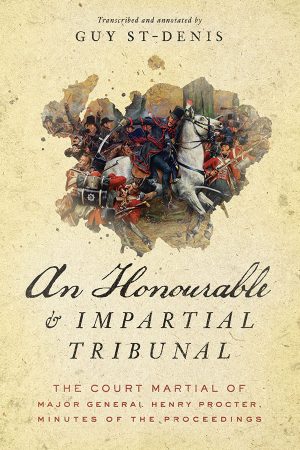
transcribed and annotated by Guy St-Denis