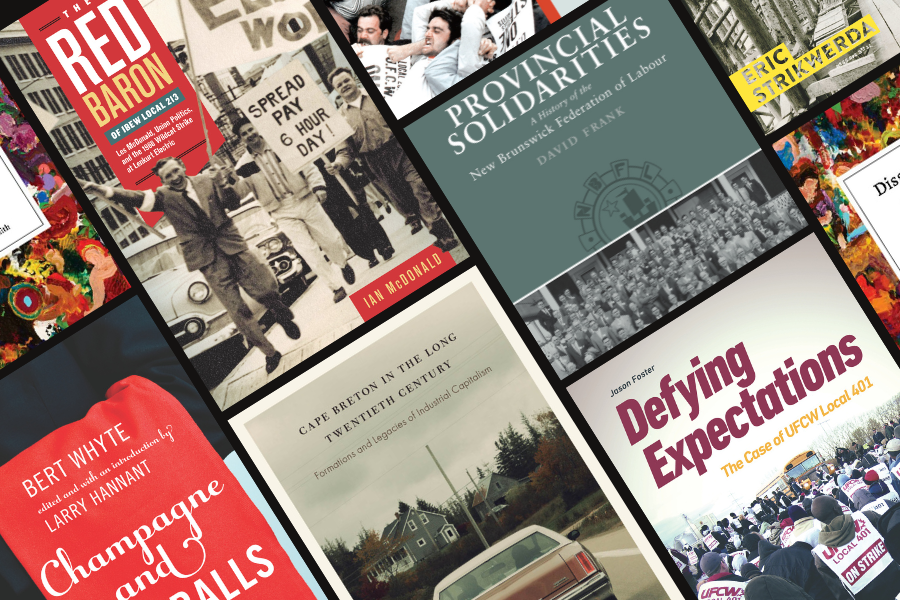
In celebration of the publication of The Red Baron of IBEW Local 213, we are highlighting our Working Canadians series. This series is published in partnership with the Canadian Committee on Labour History and focuses on the lives and struggles of Canada’s working people, past and present, and on the unions and other organizations that workers founded to represent their interests.
The series specifically seeks to counter the notion that labour history is first and foremost an academic discipline, dominated by a relatively small and self-selected group of specialists. The books in the series accordingly span a wide range of genres—from oral histories, autobiographies, and memoir to works that document local and provincial labour movements to secondary analyses founded on careful research but written in a down-to-earth style.
Underlying the series is the recognition that anyone who labours on behalf of another is a working person, and that, as working people, we continually participate in creating our own history. That history, which stands as a tribute to our collective strength, should not be solely an object of academic scrutiny. Rather, it is living part of our identity as working people and should be readily accessible to all.
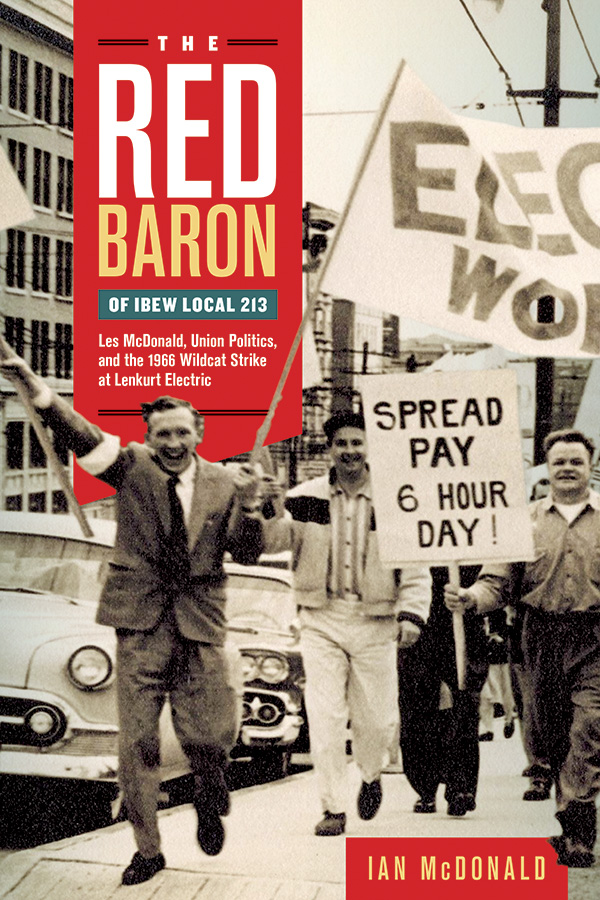
Ian McDonald
Les McDonald, the “Red Baron” of IBEW Local 213, was a Communist activist and leader in Vancouver’s electrical workers’ union. He played a pivotal role in the 1966 Lenkurt Electric wildcat strike that led to the imprisonment of four trade union leaders and shaped Canadian labour history. Referencing Local 213’s Minute Books, newspaper articles, collected correspondence, as well as personal interviews, this book examines the history of IBEW Local 213 in the turbulent years leading up to the Lenkurt strike.
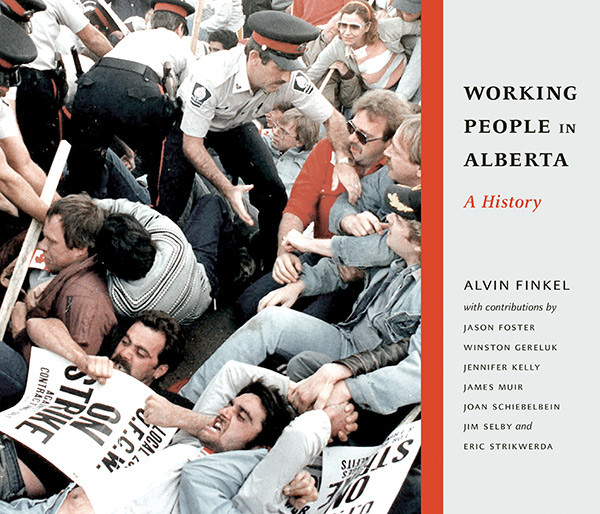
Working People in Alberta: A History
Alvin Finkel, with contributions by Jason Foster, Winston Gereluk, Jennifer Kelly and Dan Cui, James Muir, Joan Schiebelbein, Jim Selby, and Eric Strikwerda
“Beautifully designed and illustrated, Working People in Alberta is a model of public history that meets the needs of labour activists and working people for an informed knowledge of provincial history. … In times like these, history can be read with a purpose, and Working People in Alberta succeeds in achieving its goals. Union activists and their allies in all provinces will find this an instructive history, for this is a celebration not of any particular labour organization but of the vision of a more just distribution of our social and economic wealth that is shared by workers across Canada.” —Our Times
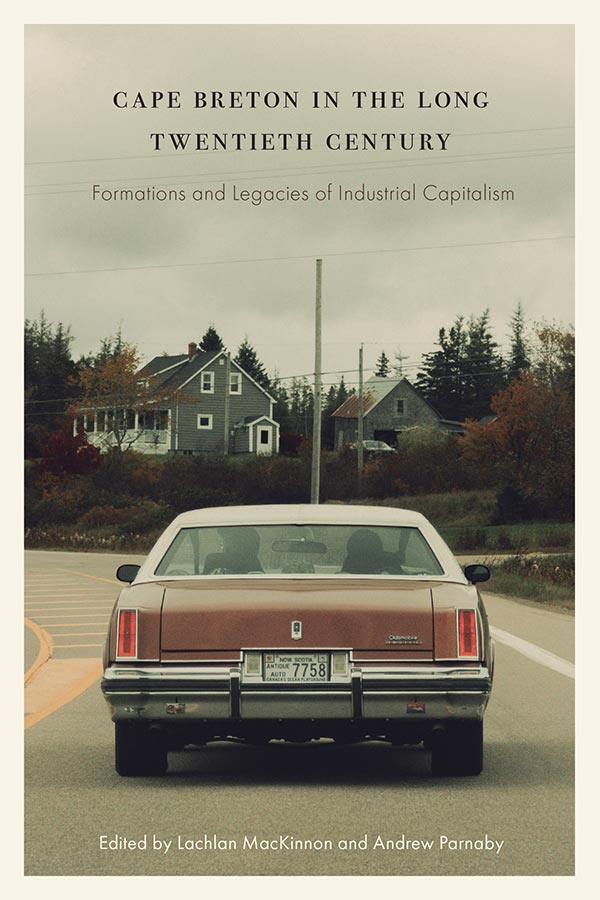
Cape Breton in the Long Twentieth Century: Formations and Legacies of Industrial Capitalism
edited by Lachlan MacKinnon and Andrew Parnaby
“Cape Breton in the Long Twentieth Century is a fine example of the wider re-engagement with political economy in the history discipline. The fact that it does so without losing its anchoring in everyday lives or diverse communities bodes well for future research on Cape Breton and Canada more generally.” —Steven High, Histoire sociale / Social History
Dissenting Traditions: Essays on Bryan D. Palmer, Marxism, and History
edited by Sean Carleton, Ted McCoy, and Julia Smith
“Whoever is audacious enough to write Palmer’s biography will want two copies of Dissenting Traditions: one for their office, the other for their study. Rich in biographical and historiographical insights, it’s also full of hints, leads, and directional arrows.” —Donald Wright, Histoire sociale / Social History
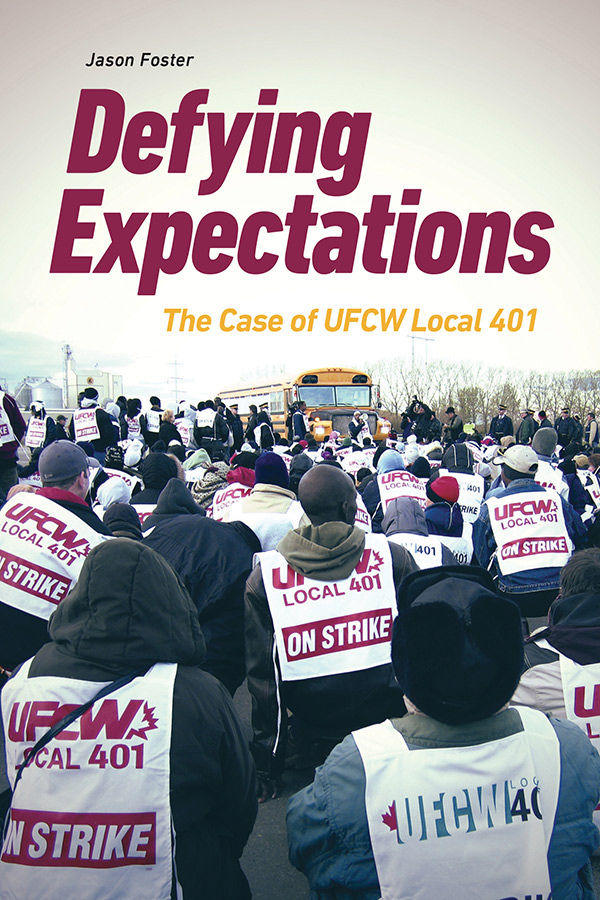
Defying Expectations: The Case of UFCW Local 401
Jason Foster
“Studying a thriving labour union in Alberta is a bit like studying an organism that flourishes in scorching, sulfur-laden undersea vents. […] Defying Expectations portrays an imperfect organization that, despite a harsh political climate, has brought concrete gains to low-wage workers and their families. Simultaneously, it underscores how the North American labour movement might connect with those who stand to benefit most from unionization by redistributing not just profits, but power.” —Alberta Views
The Wages of Relief: Cities and the Unemployed in Prairie Canada, 1929–39
Eric Strikwerda
“In the highly readable Wages of Relief, historian Eric Strikwerda expertly explains in clear, engaging prose what local responsibility for relief actually meant in Winnipeg, Saskatoon and Edmonton during the Great Depression. He advances our understanding of the 1930s by examining the ‘on the ground’ experience of those without work and investigating how local governments, citizens, and the unemployed responded to the challenge of a short-term emergency that became a national crisis.” —Bill Waiser, University of Saskatchewan
![[book cover] The Wages of Relief](https://www.aupress.ca/app/uploads/120216_The-Wages-of-Relief-cover.jpg)
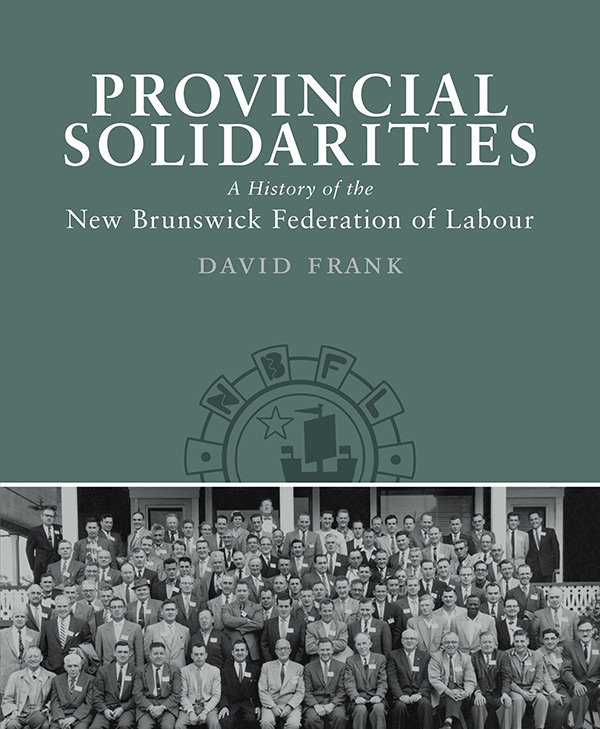
Provincial Solidarities: A History of the New Brunswick Federation of Labour
David Frank
“Frank convincingly demonstrates that the Federation’s influence rested on the necessary, ongoing task of building and rebuilding solidarity among workers and working-class organizations. . . . Provincial Solidarities demonstrates that the labour movement’s achievements have come from sustained collective action. As labour’s accomplishments continue to come under heavy attack, Frank has made an important contribution: he shows how the past teaches us the critical importance of solidarity in tackling the challenges facing working people today.” —Canadian Historical Review
Union Power: Solidarity and Struggle in Niagara
Carmela Patrias and Larry Savage
“A rich and compelling book that highlights the important role unions played in Canada’s Niagara region in both historical and contemporary periods. … The quality and quantity of original archival and oral history research is impressive.” —Labour Studies Journal


Champagne and Meatballs: Adventures of a Canadian Communist
Bert Whyte, edited and with an introduction by Larry Hannant
“Champagne and Meatballs will interest not only the general reader, but every Party member. There are far too few published biographies by Canadian Communists, and Whyte’s memoir provides an opportunity to revisit history through the lens of a unique individual and brilliant writer.” —David Lethbridge, People’s Voice