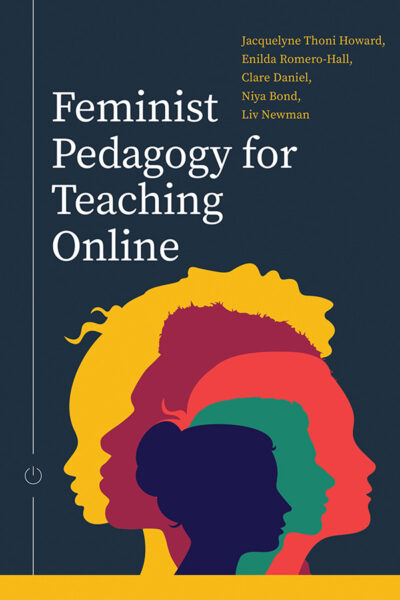
Instructors across higher education require inspiring and practical resources for creating, adapting to, and enhancing, online teaching and learning spaces. Faculty need to build collaborative, equitable and trusting online learning communities. This edited volume examines the experiences that interdisciplinary and global feminist educators have had—both their successes and their challenges—in infusing feminist pedagogical tenets into their online teaching and learning practices. Contributors consider how to promote connection, reflexivity, and embodiment; build equity, cooperation, and co-education; and create cultures of care in the online classroom. They also interrogate knowledge production, social inequality, and power. By (re)imagining feminist pedagogy as a much-needed tool and providing practical advice for using digital technology to enact these tenets in the classroom, this collection will empower educators and learners alike.
About the Editors
Jacquelyne Thoni Howard is a professor of Practice of Data at the Connolly Alexander Institute for Data Science at Tulane University. Enilda Romero-Hall is associate professor in the Learning, Design, and Technology program at The University of Tennessee Knoxville. Clare Daniel is a Senior Professor of Practice and Director of Research at Newcomb Institute of Tulane University. Niya Bond is an online educator, faculty development facilitator, and PhD candidate at the University of Maine studying online teaching and learning. Liv Newman is administrative assistant professor and Associate Director of the Center for Engaged Learning and Teaching at Tulane University.
With contributions by Nadia Awaida, Maha Bali, Karen Samantha Barton, Aras Bozkurt, Amy M. Collier, Rebecca Cottrell, Rujuta Date, Kathryn E. Frazier, Staci Gilpin, Ashley Glassburn, Letizia Guglielmo, Nandita Gurjar, Priya Gurjar, Nadia V. Jaramillo Cherrez, Bridget A. Kriner, Jo Krishnakumar, Steven James Mockler, Jana Lo Bello Miller, Sarah Lohnes Watulak, Ann Obermann, Sarah Payne, Chloe Raub, Xinyue Ren, Dana Rognlie, Stephanie Rollag Yoon, Saanchi Saxena, Catharyn C. Shelton, Elizabeth A. Siler, and Sukaina Walji.
Reviews
Collecting the voices of scholars and practitioners from multiple contexts, this interdisciplinary, rich collection calls for reimaging online learning platforms as spaces that move beyond the myopic scenario of content delivery through redundant technical infrastructure.
Ayesha Perveen, Journal of Open, Flexible and Distance Learning
Feminist Pedagogy for Teaching Online synthesizes decades of experience and pushes forward dynamic conversations about feminist pedagogy and remote learning, offering a meaningful and much-needed contribution to this area of research and teaching.
Julie Enszer, Ms. Magazine
Feminist Pedagogy for Teaching Online successfully serves as a guide for operationalizing empowering and liberatory practices and represents a needed contribution to moving beyond traditional, hierarchical approaches to create transformative and student centred online learning experiences that embrace intersectionality and equity.
Camille Rutherford, Brock Education Journal
Table of Contents
- Introduction: Priorities of Praxis: Using Feminist Pedagogy to (Re)Imagine Online Classrooms / Jacquelyne Thoni Howard, Niya Bond, Liv Newman, and Clare Daniel
- Part 1: Promoting Connections, Reflexivity, and Embodiment
- 1. Feminist Pedagogy and Collaborative Meaning Making / Letizia Guglielmo
- 2. Co-Watching as Feminist Transformative Pedagogy / Jo Hemlatha, Saanchi Saxena, and Rujuta Date
- 3. Collaborative Online Course Design / Rebecca Cottrell and Ann Obermann
- 4. Feminist Moves for Community in Online Discussions / Stephanie Rollag Yoon, Jana Lo Bello Miller, and Staci Gilpin
- Part 2: Building Equity, Cooperation, and Co-Education
- 5. Building Participatory Spaces in Online Classrooms / Bridget A. Kriner
- 6. Technology Integration in Online Feminist Pedagogy / Xinyue Ren
- 7. Consciousness Raising and Trauma-Informed Practice / Ashley Glassburn
- 8. Social Annotation as Feminist Praxis / Clare Daniel
- Part 3: Creating Cultures of Care in the Online Classroom
- 9. Humanizing Online Learning with Feminist Pedagogy / Nandita Gurjar and Priya Gurjar
- 10. What Does It Mean to “Humanize” Online Teaching? / Dana L. Rognlie, Kathryn E. Frazier, and Elizabeth A. Siler
- 11. Care, Identity, and Empowerment in Emergency Remote Teaching / Nadia V. Jaramillo Cherrez and Enilda Romero-Hall
- Part 4: Interrogating Knowledge Production, Social Inequality, and Power
- 12. Using Feminist Pedagogy in Online Geography Courses / Karen S. Barton
- 13. Cryptoparties as Sites of Feminist Pedagogy / Sarah Payne, Steven James Mockler, Sarah Lohnes Watulak, and Amy Collier
- 14. Surveillance and Data in Online Classrooms / Jacquelyne Thoni Howard
- Conclusion: Online Feminist Pedagogy: Future Learning Experiences Speculated / Enilda Romero-Hall, Nadia Awaida, Maha Bali, Aras Bozkurt, Chloe Raub, Catharyn Shelton, and Sukaina Walji
- Contributors
This work is licensed under a Creative Commons License (CC BY-NC-ND 4.0). It may be reproduced for non-commercial purposes, provided that the original author is credited.