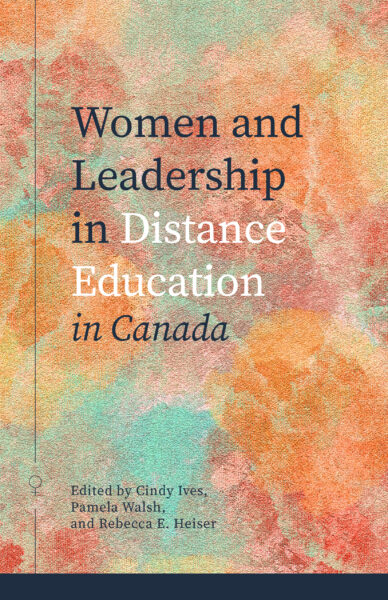
The impact of distance education on higher learning is undeniable, and women have played a significant role in shaping the evolution of this field. However, their leadership contributions have remained largely unacknowledged and undervalued. Women and Leadership in Distance Education in Canada addresses this critical gap by amplifying the voices of Canadian women who have fostered inclusive, relational, and complexity-based leadership approaches that prioritize student needs, accessibility, and social justice. With contributions from instructional designers, faculty members, and senior administrators, this timely and candid collection offers practical strategies for encouraging resilience and mentorship as well as valuable insights on program design, collaborative organizational development, and lived experiences of leadership. Through reflections on systemic barriers and creative solutions, these women leaders highlight the importance of diverse perspectives and provide valuable lessons for educational leaders worldwide.
About the Editors
Cindy Ives is professor emerita of distance education at Athabasca University and has held academic and senior administrative experience at four Canadian universities. During her career at Athabasca University, she inspired and supported innovative online and open initiatives, including MOOCs, Open Educational Resources, course and program development and evaluation, new learning designs, digital learning resources and learning analytics. Pamela Walsh is an adult and distance educator who followed a non-traditional career path to the professoriate through a succession of middle-level and executive positions in postsecondary education in Newfoundland and Labrador, and Alberta. She retired as an associate professor at Athabasca University. Her research interests include open educational practices in distance education, leadership and organizational change, and transnational distance education. Rebecca E. Heiser is a mixed-methods researcher recognized with the Governor General’s Gold Medal from Athabasca University for her doctoral work in distance education. Her scholarship explores quality dimensions, internationalization, and systems-level perspectives in online and distance higher education, with a particular emphasis on the societal impact of research. She currently serves as research faculty at Oregon State University and as Interviews Editor for the American Journal of Distance Education.
With contributions by Amy Burns, Katy Campbell, Lorraine Carter, Elizabeth Childs, Lynn Corcoran, Kristine Dreaver-Charles, Patti Dyjur, Cynthia Eden, Margaret Edwards, Natalie Green, Michelle Harrison, Jenni Hayman, Christina Hendricks, Sandy Hughes, Diane Janes, Erin Keith, Victoria Kennedy, Jennifer Lock, Sarah MacRae, Kathleen Matheos, Michelle Mitchell, Tannis Morgan, Kimberly Myrick, Sophia Palahicky, Jasmine Pham, Megan Pickard, Sherry Rose, Anne-Marie Scott, Afsaneh Sharif, Tammy Soanes-White, Kimberly Stewart, Denise Stockley, Lori Wallace, and Connie (Levina) Yuen.
Table of Contents
- Acknowledgements
- Introduction
- 1. An Old Buffalo Speaks: Reflections on My Years of Leadership in Distance Education and Online Learning
Lori Wallace
- Section I: Planning Learning
- 2. Decolonization in Distance Education: Trying to Lead through Possibility and Good Relationships
Kristine Dreaver-Charles
- 3. Not Just a Pretty Course: Aesthetic Leadership in Distance Education
Cynthia Eden, Natalie Green, Sandy Hughes, Victoria Kennedy, and Megan Pickard
- 4. Leading Distance Learning in Canadian Higher Education: The Three Cs
Jennifer Lock, Patti Dyjur, and Michelle Mitchell
- 5. Leadership in Distance Education: Vision Is Vital
Kim Myrick and Denise Stockley
- 6. Building Alternative Futures: Co-Creating an Online Asynchronous Degree Program for Early Childhood Educators
Sherry L. Rose and Kim Stewart
- Section II: Communicating and Collaborating
- 7. Through a Glass Darkly: Middle-Level Leadership in an Era of Online Education
Amy Burns
- 8. Leading In, Through, and Beyond a Crisis
Lynn Corcoran and Margaret Edwards
- 9. Interpersonal Communication: A Critical Reflection Tool
Sarah MacRae
- 10. First Year by Distance Education and Campus Manitoba: A Manitoba Women’s Story
Kathleen Matheos
- 11. A Strategic Response to the Demands of the Pandemic: A Black Woman’s Leadership Story
Sophia Palahicky
- Section III: Reflecting on Experiences
- 12. Hurry Slowly: A Conversation about Leadership in Distance Education through Multiple Roles
Michelle Harrison, Christina Hendricks, Tannis Morgan, Anne-Marie Scott, and Elizabeth Childs
- 13. What’s up, Doc? The Impacts of Graduate Study for Women
Jenni Hayman
- 14. (Re-)Envisioning Instructor Leadership Strengthened through a Decolonizing and Culturally Responsive Lens
Erin Keith
- 15. Carving Out Spaces
Jasmine Pham
- 16. Breaking Barriers and Leading from the Middle: A Racialized Woman Educator’s Experiences
Afsaneh Sharif
- 17. The Leadership of Walking Alongside
Tammy Soanes-White
- 18. Leading at a Distance: Insights and Practical Advice for Early Career Women in Higher Education Leadership
Connie (Levina) Yuen
- 19. Female Leadership in Online Education in Canada: Reflecting and Forging the Future
Lorraine Carter, Diane Janes, and Katy Campbell
- Conclusion
- Contributors
This work is licensed under a Creative Commons License (CC BY-NC-ND 4.0). It may be reproduced for non-commercial purposes, provided that the original author is credited.
![[book cover] Online Distance Education](https://www.aupress.ca/app/uploads/120233_Online-Distance-Education-cover-300x450.jpg)